Invisibility

9.30 in Okehampton Town Centre, and it is not busy. I am standing opposite the pedestrian crossing, just up (or is it down) from the entrance to Red Lion Yard, between it and the flower stall. There’s a yellow plastic bag at my feet, and I am wishing that I was wearing something a little warmer than a T-shirt, fleece and scarf. I can see the church clock. It is not moving very quickly.

I am holding a collection tin, although these days they are yellow plastic. I emailed one of the girls earlier in the week, and told her that Caroline and I were going to sell flags in Okehampton on Saturday morning. Yesterday evening she told me that she had had a vision of the two of us wrestling with flags and wondering how we would sell them, and, rather more, why anyone would want to buy one. Only when I told her that for my generation, today’s stickers were, when we were children, paper flags, attached with a pin – ‘flags’ – did she understand.

As I told her, I recalled, aged 12, standing in the Square in Wallingford, selling flags for the Lifeboats, a tray of flags round my neck, and the lifeboat shaped collecting tin on a red string. My mother organised two collections, a house to house collection for Imperial Cancer Campaign – I used to go with her up Wilding Road (one of the longest in Wallingford, or at least to a small boy it seemed that) – and the other for the Lifeboats, which despite being some 100 miles from the nearest sea was always well supported. You don’t need to live next to the sea to feel the call of a seafaring heritage!

But back to Okehampton on a cold, grey Saturday morning. What struck me most was my invisibility to at least half of the passers by. Rattling the tin is not allowed, and so the next best thing is a sturdy good morning, then catch the eye, and smile. But for many, hurrying by, I simply didn’t exist – they looked right through me. It was disconcerting and, in a very small way, I felt what I am sure many Big Issue sellers feel – a nuisance, someone who if you ignore you can pretend isn’t there.

And yet for every two or three persons who scurried by, head down or consciously avoiding me, there was one who replied to the good morning, fumbling for change, apologising that it wasn’t very much, engaging in small talk – or like the couple in their late 60s who told me that the CAB had been their lifeline. That’s why it is worth doing it.

The CAB has done a brilliant job in Okehampton this year, and they do it every year. I may be a little partisan – Caroline works for them – but an hour on the street on a Saturday morning is all you need to know this.

Sorry and sad?

“We are sorry.”

“We” is News International, and in the course of one well-crafted apology – and would you expect anything less from a consummate newspaperman? – Rupert Murdoch used the S-word three times (once “deeply”), offered us “regret”, acknowledged “the serious wrongdoing that occurred” and committed (but without quite saying it)  his organisation to “live up to this” (the idea of a free and open press) and to taking “further concrete steps to resolve these issues and make amends”.

As apologies go (and we after all live in the age of the incontinent apology) it ticked nearly all the boxes.

But is it authentic?

It is never just the words, but the context that is important. Not just the sorry bit, but much more – not least the taking of responsibility and the commitment (whether express or implied) not to do whatever you are apologising about again.

And that is the bit I missed.

And “Sorry and sad”? 19th century rhyming slang for “bad”.

Watching warblers

Father’s Day yesterday, and with the children away the opportunity for a day for ourselves and a walk down the Exeter Canal towpath.

No walk for us is ever just a walk, and even if summer birdwatching all too often takes second place to gardens, we took the bins. Just as well: Reed Buntings all day, Goldfinches – at one moment upwards of a dozen in the willow on the opposite bank, Greenfinches (the first we have seen this year), families of Sedge Warblers in the reeds along the canal edge – see my Tumblr photo, Little Egrets, a Great Black-Backed Gull feasting on a very dead and very large fish, Swans, Herons in the air and at the water’s edge, a solitary Curlew, all manner of Tits (including some on bicycles), a Whitethroat, Gulls and Mallard, and Swallows all along the towpath, hawking insects.

And the highlight? Probably a Cetti’s Warbler in full view: we had heard it (as you do) but then there it was, on the top of bush, drowning out everything and everyone.

A perfect day. Calls from two of the children (sadly I still put the mobile in the backpack) and a text from number three.

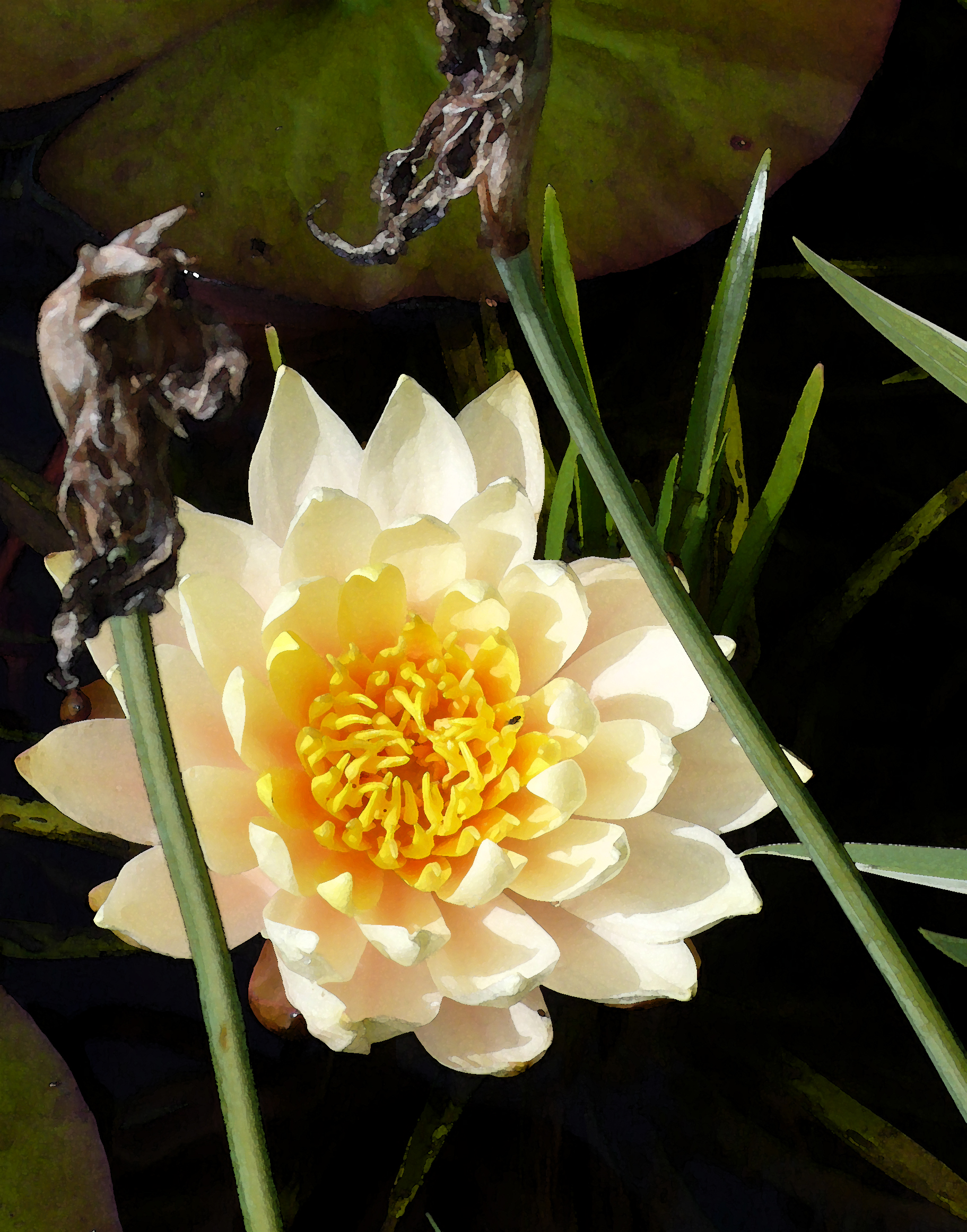
And home to sit by the pond, have a cup of tea – and to be surprised by a water lily that I remember planting but which didn’t flower at all last year.


A wheelbarrow of frogs

The recent stories of senior City partners and their expenses are not very instructive, although perhaps we should not be so surprised – either at their behaviour or the reaction of their fellow partners. Lawyers are imperfect at the best of times.

What is far more interesting is what this says about managing partner risk in professional service firms, and in particular in law firms (we don’t share quite the same world view as accountants, architects and others).

The crux of the problem is the tension between a firm’s need to manage its partners and the fact that they are “highly educated individuals who require a large degree of autonomy and discretion to be able deliver very personal and highly tailored services to clients” – the quotation is from Too Many Chiefs, a study on decision making in professional service firms by Tim Morris, Professor of Management Studies at Oxford’s Säid Business School.

The problem with autonomy and discretion is not just the sense of ownership entitlement that so often accompanies them, but the risk of partners pushing boundaries when they can (and when they actually see them!). And to compound the problem, this type of behaviour is often culturally acceptable to fellow partners.

And going back to the expenses stories, don’t miss the on-line comments: I particularly liked this from Anonymous on the report in The Lawyer on Hogan Lovell and the allegedly errant Christopher Grierson,

The way that this has been dealt with, and the fact that the police have still not been involved, has simply confirmed my view of City firms as moral vacuums dominated by sociopaths.

I am not sure about the moral vacuum bit, but that anonymous commentator must surely have been reading a 2009 post by Venkatesh Rao (Venkat) in ribbonfarm.com, The Gervais Principle, Or The Office According to “The Office”, in which he identifies the “sociopath” layer as comprising ‘the Darwinian/Protestant Ethic will-to-power types who drive an organization to function despite itself’ and then states the Gervais Principle,

The Gervais Principle is this: Sociopaths, in their own best interests, knowingly promote over-performing losers into middle-management, groom under-performing losers into sociopaths, and leave the average bare-minimum-effort losers to fend for themselves.

So now you know.

And why a wheelbarrow of frogs? I once heard Nigel Knowles describe managing his partners as akin to pushing a wheelbarrow of frogs uphill in the rain.

The boys are back (again)

We reached Yarner Wood not long past 10.00: our first visit this year and a wonderful sense of anticipation.

Although quite grey down at the car park, it was warm in the hide (nothing much to see – just a pair of Blue Tits exploring one of the nesting boxes ) and as we climbed the path, sun burning off the cloud and the sky turned blue. The woodland is still bare -branched, so it is easy to spot what there is, or isn’t, but it is filled with bird song: all the usual suspects (Robin, Wren, Blackbird, Blue Tit) and also Chiffchaff,  Nuthatches, a Goldcrest, the drumming of one Woodpecker across the valley and another up the hill behind us, and a Raven seeing off a Buzzard.

Add to this Bumblebees on the bilberry, the occasional Peacock butterfly, and Wood ants warmed by the sun and busy.

It was a perfect Sunday morning – and then not one but two male Pied Flycatchers: the first by Box 46, and the second a little further on, engaging in some territorial argy-bargy with a Nuthatch. Last year Pied Flycatchers were  first seen in Yarner on 7 April, and we didn’t see them until 21 April (when I posted The boys are back). They are early this year.

It may only be March, but for us Pied Flycatchers are one of the first signs that summer is really on its way.