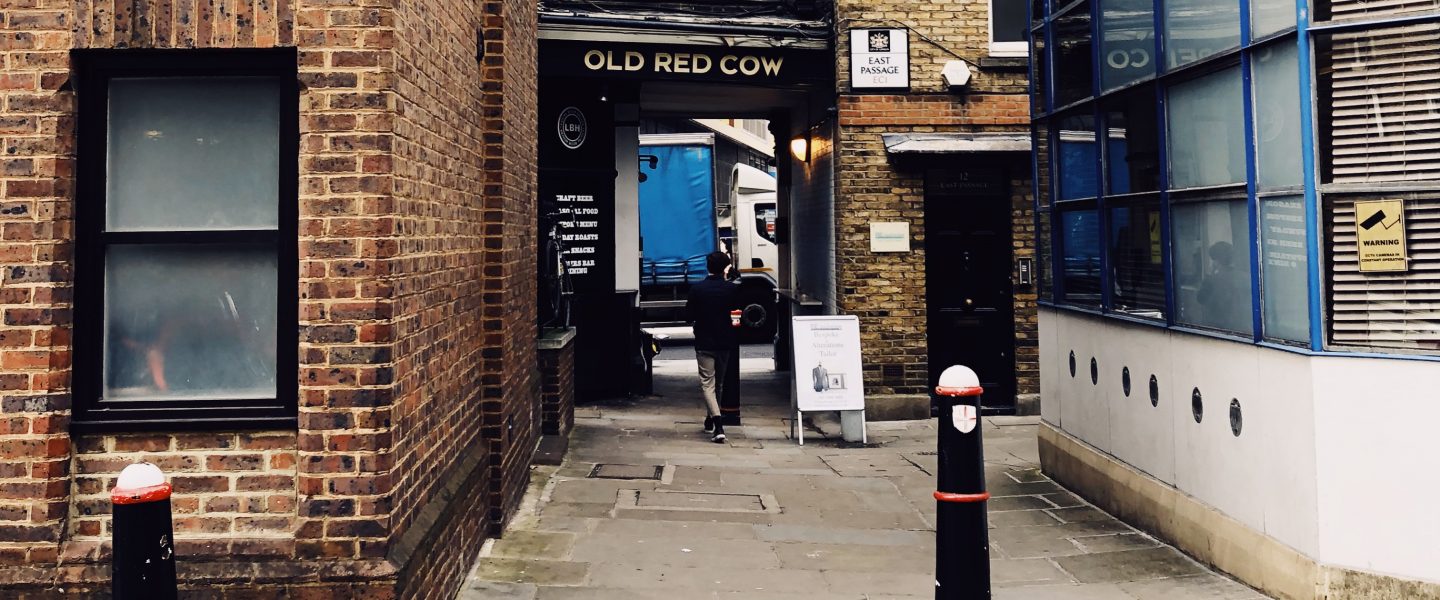
The really difficult bit – don’t do it. Stop acting. Walk away.

I was very struck by a comment, reported in today’s FT (paywalled), by Vladimir Ashurkov, executive director of the Anti-Corruption Foundation, set up by Alexei Navalny,

[M]y experience in international finance has taught me not to expect moral-based decisions by professional services firms.

What are the City professional services firms with links to Russia going to do? What are their internal ethics advisers telling their management boards? What are the pressures they will feel from clients, their staff, their alumni, if they aren’t already? Are they ready to walk away? Are they already looking for the right weasel words?

Who knows? I don’t – but do they?

20 years ago Bill Knight, who had just stepped down as Senior Partner at Simmons & Simmons, wrote an article for PLC titled Practical morality for lawyers. It is still available if you have a subscription. He referenced the then recent financial scandals – Enron, Anderson, Tyco, Worldcom etc. Remember them?

It’s a short article. It is also as applicable today as it was then, possibly more so. It ends with a clear and simple message,

Don’t let anyone tell you that you are not the guardian of morality. We all are. If not, who? Politicians? Now I really feel safe.

The gathering storm

The trouble with parties is that there is always a party organiser. A party simply doesn’t happen without an invitation. A gathering – if you stretch the truth a little – may just occur.

This is why Downing Street and its supporters have been so particular about their language? Their gatherings, they keep suggesting, were not premeditated.

Under the lockdown rules meeting more than the prescribed number was simply to risk a relatively light fine under a Fixed Penalty Notice (FPN) but to organise and host a party means a fine of a different magnitude.

So whether or not a gathering was actually a party is important. We, the public, may have little trouble in distinguishing the two but precision is critical when it comes to law.

The most recent revelations suggest that emails were sent inviting people to the ‘gathering’ where, in Conor Burns’s immortal words, the Prime Minister was “ambushed with a cake” . . . before he later changed the story and said there was no cake. And the emails came from where? And who brought the cake? Not all parties have cake but most birthday cakes end up at parties.

So is this why the Met has suddenly put the brakes on Sue Gray’s report? Because, as always, it’s all in the numbers. Like the difference between £200 and £10,000.

We could have done with this sooner . . .

It’s taken almost two years for a Tory MP to quote Leo Amery at Boris Johnson – see my post from 20 March 2020 Cometh the hour . . . but at PMQs today, that is what David Davis did.

Whether Davis’ dramatic intervention this afternoon will have the same impact that Amery’s did in the Norway Debate is anyone’s guess. Johnson affected not to recognise the quote,

I must say to him, I don’t know what he is talking about. What can I tell him – I don’t know what quotation he is alluding to . . .

A little disingenuous you might think, given Johnson never tires of tiring us by channelling his inner Churchill. What is certain, though, is that the reference to Amery will have made the intervention all the more galling for Johnson. As the Daily Telegraph noted, it will have been “the ultimate insult”.

Many Tories already share Davis’ view that Johnson is no longer fit to conduct the affairs of the nation – for that is the message that Cromwell delivered to the Long Parliament and that Amery repeated to Chamberlain. The party opposite know it.

But wanting change and demanding change doesn’t mean it will happen, or perhaps not quite yet.