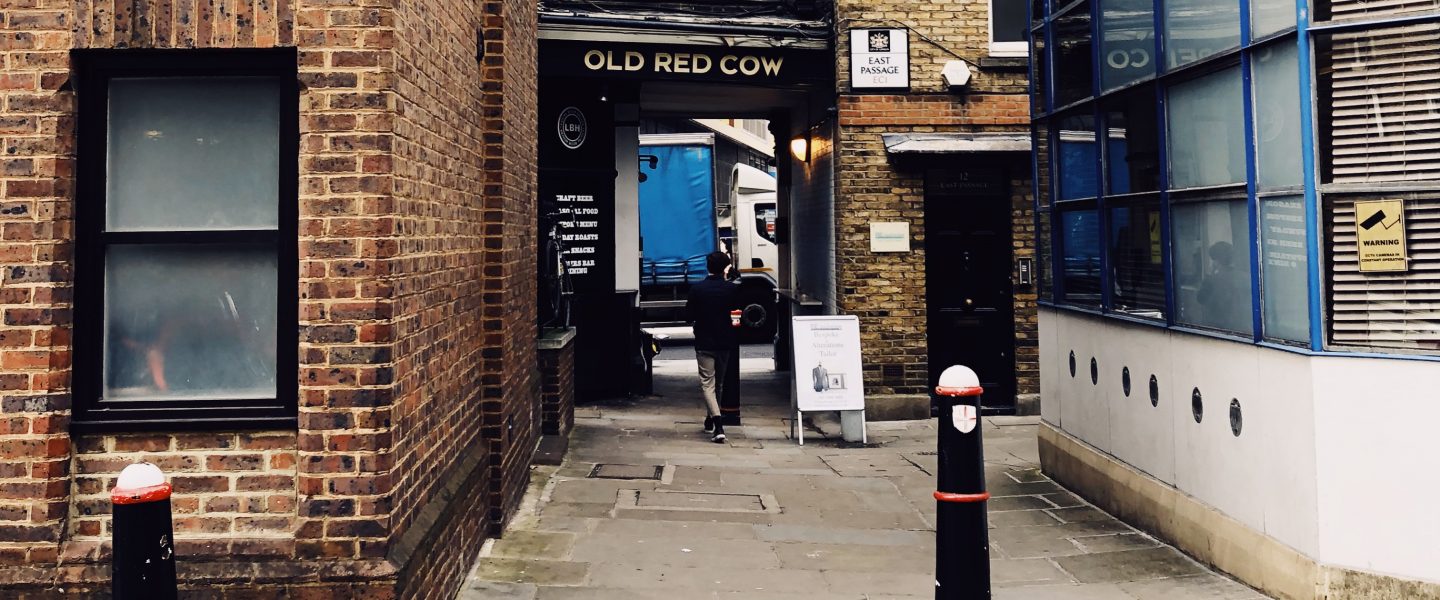
Big Brother is still with us, but for how long?

The Telegraph had another story this morning about RIPA and CCTV intrusion (probably serves me right for reading this particular title). But like John Naughton on Memex 1.1 yesterday, I too wonder whether our new government will “deliver on the rolling back of the national security state”, standing by its commitment in its policy document “to implement a full programme of measures to reverse the substantial erosion of civil liberties under the Labour government and roll back state intrusion”.

The last government never admitted that it presided over the most authoritarian government this country has seen outside of wartime. Commenting on the plans to scrap ID cards, the National Identity register and the ContactPoint database, regulate CCTV, and restore rights to non-violent protest, a Labour spokesman continued to trot out the fiction that Britain was not a surveillance society.

The problem, as so often is the case, is the gap between intention and reality, and the insidious effect of policy creep.

A Surveillance Society? – The Government Reply to the Fifth Report from the Home Affairs Committee, given in July 2008, recognised the issues,

Ensuring the application of proportionality and maintaining the appropriate balance is key to providing the right level of safeguards for the public and providing the right level of service to the public. That approach will continue to be adopted in all that we do. The Government acknowledges concerns raised in some quarters that this balanced approach always starts out as the ideal but gradually, the balance between the rights of the individual and the powers of the ‘centre’ is severely tilted. That is why in successive pieces of legislation we have made it clear on the face of the Act exactly what can and cannot be introduced by secondary legislation and why there is a requirement for such secondary legislation to be put before Parliament for approval.

But what the Government said, and what it and its agent did, were very different. Will this government avoid this?

As John Naughton says, “I’m not holding my breath”.

Certainly not out of the woods yet

Nick Robinson is so often spot on. From his Newslog about the reactions of the Chancellor and two would-be Chancellors to Ken Clarke’s comments about a hung Parliament,

So, on a day when unemployment rose to the highest level seen since 1994 and at a time when all parties agree we are facing the worst budgetary crisis and the biggest spending cuts in decades, these three [Darling, Osborne and Cable] argued about the only fact that has electrified this election – opinion polls which suggest the likelihood of a hung Parliament – and which, whisper who dares, might turn out to be wrong.

Let’s hope so.

And as for the unemployment figures (8 per cent of the workforce, taking it to the highest since 1996), Yvette Cooper, Work and Pensions Minister, was quoted as saying “we are not out of the woods yet.”

Rumsfeld’s Rules

Donald Rumsfeld’s Rules (Advice on government, business and life) may have been around for a while, but I only found them today, courtesy of a link in one of Kevin O’Keefe’s tweets and Rick Klau’s weblog. As Rick Klau comments, “They are, put simply, brilliant”. Read them: this is the link.

I particularly enjoyed this one,

Reduce the number of lawyers. They are like beavers. They get in the middle of the stream and dam it up.

Some 30 years ago, I was the gofer to one of the corporate partners in the firm that then employed me. We were advising a merchant bank, in turn advising the independent directors of ATV. It was (or seems) a very long time ago, but I have two vivid memories of that particular transaction.

The first was the appearance, very late one night, of the irrepressible Lew Grade. He, and his cigar, came through the double doors that led off into the Executive Suite at the top of the building. He just wanted to know that we were all being looked after; and as he left, he executed a couple of steps just to let us know that he was still a hoofer at heart.

My second memory, and this was triggered by reading Rumsfeld’s advice about lawyers, was of Robert Holmes à Court walking unannounced into an all parties meeting: clients, merchant bankers, stockbrokers, accountants and a fair number of lawyers. His Bell Group had just emerged as  a buyer. Holmes à Court looked at the suits sitting round the table: there were probably some 20 plus people in the room, and he slowly worked round the table, asking everyone who they were, who they were with, and what they were doing. Depending upon the answer given it was either a “You may leave now” or “You may stay”. All very courteous but nonetheless there was steel in his eyes.

I was one of the last he got to.

“Well, what are you doing?”

“Taking the notes.”

“You had better stay”

And stay I did. Holmes à Court was himself originally a lawyer, and had a very well-developed sense of who and what was needed.

Playing the football card

What is it about Labour politicians and football? Is it the need to demonstrate their ‘man of the people’ credentials, and that they are in touch with, and true to, their roots (whatever these may), or is it that they are just like any other politician, and think they know best about everything?

Whether it was Harold Wilson and the 1996 World Cup, or Tony Blair telling us that he used to watch Newcastle United as a boy (even if his hero Jackie Milburn had hung up his boots quite a few years before), over the years no Labour politician has been able to resist playing the football card.

The latest to do so is Mike O’Brien, the health minister.

O’Brien chose Twitter as the medium, and what he offered in his 140 characters was “The sacking of Terry is crass. Capello has bowed to tabloid pressure. Infidelity is bad but I saw no signs of fatigue in his football”. Having looked at his tweets, the one about Terry is possibly the most interesting unless you are one of O’Brien’s constituents (although glass houses and stones comes to mind, as I don’t think many of mine would pass Tammy Erickson’s test “Are you fun to follow on Twitter?”: see her HBR article). But why tweet about it all?

And why the strange linkage between infidelity and fatigue? Is there something he knows as health minister he isn’t telling us!

No more gunboats

China’s decision to press ahead and execute Akmal Shaikh is repellant : for once Gordon Brown speaks for us all when he says, “I condemn the execution of Akmal Shaikh in the strongest terms, and am appalled and disappointed that our persistent requests for clemency have not been granted”.

But there are two things that have most forcibly struck me about this case: the impotence of the United Kingdom and its diplomatic effort, and China’s intemperate reaction to criticism.

From the FT.com report this morning

A Chinese foreign ministry spokeswoman said in Beijing that no country has the right to comment on China’s judicial sovereignty.  “It is the common wish of people around the world to strike against the crime of drug trafficking. We express our strong dissatisfaction and opposition to the British government’s unreasonable criticism of the case. We urge the British to correct their mistake in order to avoid harming China-UK relations,’’ she said.

There is no mistake; and, whether China likes it or not, any country has the right to comment on China’s judicial sovereignty.

Whether as at Copenhagen, or as in this sad case, it seems that the unspoken excuse of the Chinese leadership for the actions it takes, or more often does not, is its domestic situation. That should not deter us from condemning it.